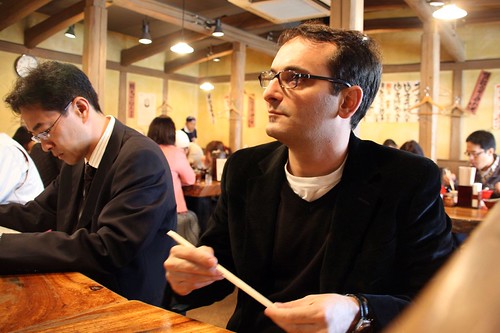
Sunday, November 18, 2007

The End?

I’m writing this on the last day of my trip as I speed towards Tokyo on the Shinkansen, which is perhaps my favorite train in the world. I’ve spent the better part of the last 300 days traveling from Sydney to Tokyo, a total of ten countries and dozens of cities, posting more than 100 blog entries and 3,000 photographs. That I'm going home hasn’t completely sunk in. I’ve been taking this trip one day, one week, one city at a time, and the end has crept up on me. So it is with mixed feelings that I return to Tokyo, where I’ll spend one more night before boarding a trans-Pacific flight (my least favorite form of travel) back to the U.S. of A.

I’m excited to return to familiar territory, where I speak the language and I am well versed in the customs. I’m looking forward to seeing family and friends, to eat my mother’s cooking and watch late-night cable television. But I’ll miss the freedom of the open road, the expected pleasures and unexpected impediments that make for open-ended travel. I’ve got an itch (no, not that kind of itch), formed early in life, that leaves me restless. It will lead to more travel in the future. For now, it's time to reflect on 2007 and look to 2008.

As a final installment of Packmonkey: Asia (leaving the door open to Packmonkey: North America and Packmonkey: Europe), I offer a short summary of the good, the bad and the in-between. This is hardly a recap of my entire ten months on the road, merely a short trip down memory lane. I plan to offer a little more reminiscing once I'm back in Los Angeles.


Everything Australian: I spent nine weeks in Australia in February and March, traveling overland along the southern and western coasts from Sydney to Broome, then into the Outback on a 4WD trek from Adelaide to Alice Springs. Australia is a beautiful country. The interior is desolate, stark and remote, the coasts rugged and wild. As a whole, it is a challenging, rewarding and breathtaking place to travel. I will never forget sleeping under the stars in the Painted Desert or swimming in sea lions in the Eyre Peninsula. I also made some lasting friendships in Oz: Bernie and Kate, Dean, Elizabeth – keep in touch! Australia raised the bar for all subsequent destinations. The time I spent in Australia amounted to the trip of a lifetime. Had I returned home after the Outback, I would have been satisfied.

Monkeys and Mountains in Malaysian Borneo: I arrived in Malaysia with low expectations. I left in love with the country. The Malaysian people were some of the friendliest I encountered - always a smile for the wandering Jew in their midst - and the food unexpectedly satisfying. The three weeks I spent in Malaysian Borneo sealed the deal: encounters with the orangutans, proboscis and langur monkeys, Uncle Tan’s jungle camp and the trek to the summit of Mt. Kinabalu, which left me exhausted but marked two of the best days of the whole year.

Backpackers’ Laos: Backpackers flock to Southeast Asia, so it’s no surprise that there’s a backpacking culture in this part of the world. My time in Laos, from my arrival at the border with Thailand to my departure from Vientiane, was the ultimate backpacker’s experience. The country itself is wonderful, remote and rural, yet unspoiled by the tourism you encounter in Thailand and Vietnam or the tragic history of Cambodia. Laos had been described to me as Thailand of 20 or 30 years ago. Ten short days in country showed me the Southeast Asia I dreamed of visiting.

What made my time in Laos really special was the friendships I made. Two days floating down the Mekong solidified a bond with my French amis, Guillaume and Emmanuelle. We spent the evenings in Luang Prebang at a sidewalk bar laughing over glasses of cloudy pastis, the days meeting the young monks at the city’s temples or swimming at the tranquil waterfalls outside of town. In Vang Vieng I met Mitzi and her daughter, Miksa, from Hawaii. We explored caves and rented bicycles for a trip to the local market. At night we relaxed over cheap food and beer at the backpacker cafes. Miksa and I even found time for a marathon afternoon watching "The Simpsons." Traveling friendships are short and intense, and one of the joys of travel.

Food, Food, Food: Who doesn’t love to eat? Everywhere I traveled there was something new to taste: kangaroo sausages in Outback Australia, blue rice in Malayasia, chicken rice in Singapore, khao soy in Northern Thailand, even deep-fried tarantulas in Cambodia. There were also some old favorites to devour: sushi and ramen in Toyko, curry and pad thai in Thailand. Somehow, I still haven't tried durian.

Indonesia Headaches: I arrived in Indonesia with high hopes. Two weeks later I couldn’t leave get out the country fast enough. From the touts and taxi drivers oozing desperation in Bali to the scam artists in Java who took me for a ride, I was overwhelmed by the amount of ill-will I felt in Indonesia. I’ve heard reports from other travelers about good times in Bali and Java, so I will not say the country is filled with bad people and bad times. At least I left with two good memories: sunrise at Mr. Bromo and an afternoon spent wandering the ancient Buddhist temple at Borobudur. These two places almost make up for all the aggravation I experienced everywhere else in Indonesia.

Tourism in Thailand and Vietnam: Thailand and Vietnam are two of the most popular destinations in Southeast Asia. They were also, for me, two of the most disappointing destinations on my trip. In the island of Southern Thailand, I encountered hoards of westerners traveling from one beach to another. It seemed that the locals in sight were either serving the foreigners beer and food or cleaning their rooms. There was also the terror of the night of the flying termites. The beaches are nice enough, but crowded and dirty. Were it not for the energy of Bangkok or the charm of Chiang Mai, I’d have to write off Thailand as a loss.

In Vietnam, the tourism treadmill also operates at full speed. Perhaps it was because I’d been on the road for six months, or perhaps it was because I was exhausted from a whirlwind tour of Cambodia. Whatever it was, I found Vietnam to be hectic in all the wrong ways. From the overcrowded and polluted streets of Ho Chi Minh City and Hanoi, where even the act of crossing the street was hazardous, to the constant haggling over prices, Vietnam was a downer.

Life and Death in Cambodia: I only spent 10 days in Cambodia, but those days contained some of the best and worst times of my trip. On the positive side was an extraordinary tour that took me into the Cambodian countryside and introduced me to the real Cambodia of today. The tour also resulted in a few of those backpackers’ friendships that I mentioned earlier. I loved drinking late into the night at a small bar in Kampong Cham and on the beach at Sihanoukville with Sally and Renee, nurses from Adelaide, Australia. And Kathe, a university student from Holland, turned into a close and unexpected friend.

On the down side was a bus accident that left two Cambodians dead and exposed the utter corruption and poverty of Cambodian society. I refer you to the impassioned blog post I wrote on the afternoon of the accident.

Return to Tokyo: I knew that I wanted to end my trip in Japan, to return to a place I lived for 18 months in the early 1990s. I did just that and I am now reminded of that old adage about not being able to go home again. In the years since I lived in Tokyo, I’ve changed, Japan has changed and the world has changed. I love the country and the Japanese. I loved taking Japanese lessons and exploring the country again. But in the end I could have done with less. I’d been on the road for most of the year and was tired, wanted to do little more than curl up with a good book and a glass of whiskey. So I spent most of my time in Tokyo enjoying solitude and rest.

My time in Tokyo was good for the spirit, but perhaps something of a missed opportunity. Perhaps what it taught me is that the next time I take off and travel the world, I’ll impose a six-month limit. For me, that seems just right.

So on the eve of my return to the U.S., I look forward to reuniting with family and friends, to starting a new chapter in my life that builds on everything that’s come before.

Some people say travel changes you. I think that’s a big fat myth. I’m still the same person I was when I started this trip. What I have now that I didn’t have before is a greater understanding of the world and my place in it. I think I’m more humble. I’m definitely more aware of how fortunate I am. My place in this world is small, but my future is unlimited. The end? I don't think so. Just another beginning.

A HUGE thanks to everyone who checked in and supported me over the past ten months. I will see you all very soon!
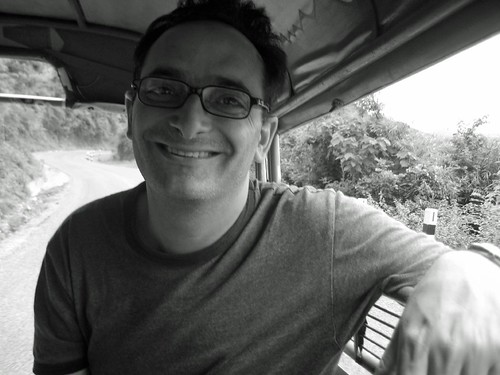
Labels: , , , , , , , , , , , , , , , ,

Friday, November 09, 2007

The Bomb

I didn’t come to Nagasaki for the temples. There are plenty of temples, all of them very beautiful. But really, who comes to Nagasaki for the temples? Most visitors come to Nagasaki to learn about the atomic bomb.

It’s true that this port city on the western edge of Kyushu has a long and vibrant history, that it was once the most international of Japan’s cities, open to trade with China and Holland when the rest of the country was closed to the outside world. What brought me here is the day in Nagasaki’s history, August 9, 1945, when the United States dropped an atomic bomb on the unsuspecting populace. Historians argue that the bombs dropped on Hiroshima and Nagasaki forced the capitulation of the Japanese and hastened the end of World War II, saving more lives then they took. Whatever the case may be, the loss of life was substantial and the results horrific. (The Wikipedia entry on the atomic bombings of Hiroshima and Nagasaki is very informative, and a shorter read than Richard Rhodes' "The Making of the Atomic Bomb." I also recommend John Hershy's "Hiroshima."

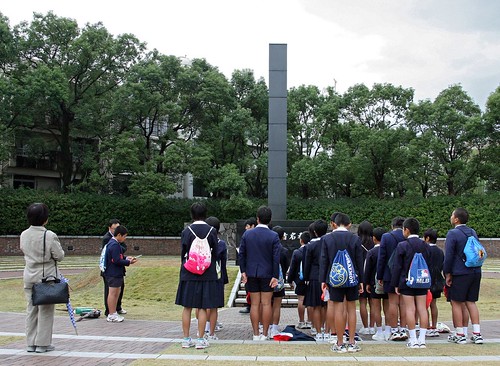
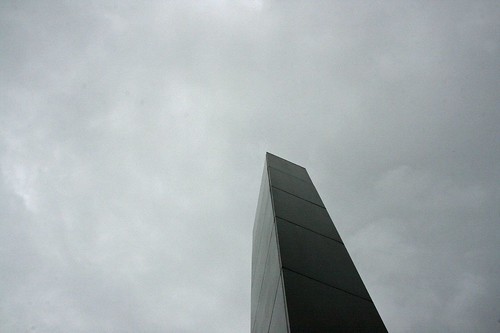
A visit to the site of an atomic bomb detonation is a surreal experience. A black monolith in a small public park marks the site of the explosion, dubbed the “hypocenter.” The monolith points to the sky, to the spot 500 meters above ground level where the bomb (nicknamed “Fat Man”) detonated, instantly killing 75,000 people.

The Memorial at Atomic Bomb Hypocenter Park


Hypocenter

It’s a normal place today, serene even, surrounded by houses and shops, a sports complex to the west and a baseball stadium to the north. I tried as best I could to imagine what it was like when the bomb exploded. I’m afraid my mind isn’t capable of that level of imagination.

As of today, the Japanese government has verified the names of more than 143,000 victims of the bomb. It’s not an insignificant figure, but compare it to the six million Jews killed by the Nazis, the quarter of a million Indonesians wiped out by the tsunami of 2005, or even the hundreds of thousands of Iraqis who’ve died in the past few years. The horror of the atomic bomb, therefore, comes not from the numbers killed, but from its ferocity, its ability to incinerate and destroy in the blink of an eye. This power is documented at the Nagasaki Atomic Bomb Museum, a valuable repository of artifacts and information related to both the bombing of Nagasaki and the larger subject of nuclear weapons.

The museum seems to be a requirement of the Japanese educational system. On the day I visited, a Tuesday afternoon in November, a steady stream of school groups marched from the hypocenter to the museum. The galleries were packed with teenagers, which left me feeling like an interloper on their field trip. Nevertheless, I was able to take my time and view the twisted relics and the photographs of the leveled city.

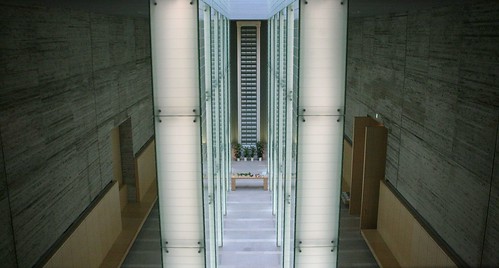
After so much destruction and death, it was a relief to enter the memorial for the victims of the bomb. The memorial hall is not on the itinerary of the school groups, which means it remains empty and quiet. It is a chamber designed for contemplation and prayer. In contrast to the museum, the memorial works through understatement and simplicity, with a single small room where images of the dead are shown on three wall-mounted monitors. In the “Remembrance Hall,” twelve pillars of light lead to a registry containing the names of the dead.

Nagasaki National Peace Memorial Hall for the Atomic Bomb Victims

I don’t want to get political here. But this visit reminded me that there are still tens of thousands of nuclear weapons in the world today. It’s a wonder that not a single one has been used since August 9, 1945.

Labels: , ,

Wednesday, November 07, 2007

Art Smart

Cities all look the same after a while. There are exceptions on the world stage; Paris, New York and Rome will never be mistaken for anything other than the singular creations that they are. But most cities are interchangeable; you’ve seen one you’ve seen them all.

This may be especially true of Japanese cities, where concrete is the order of the day and logic a byproduct of urban planning. A Japanese city may have a few major thoroughfares, but mostly it’s a collection of dreary, functional architecture haphazardly assembled into an urban sprawl. Nobody comes to Japan to gaze at the architecture. Leave that to the Parisians.

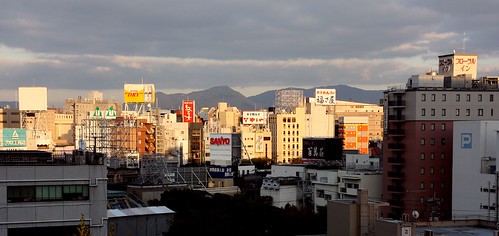
This leaves someone like myself at a disadvantage. I’m an inveterate wanderer, happy to leave my map behind and let my feet lead the way. In Japan this can result in walking through miles and miles of forlorn industrial landscape. This truth hit me hard when I arrived in Fukuoka, the largest city on the island of Kyushu. This is a city on the rise, though I think it’s still got a ways to go. There’s a bid to host the 201 Olympic Games, which would give the city a boost. For now, however, this city of 1.5 million strikes me as indistinct from other Japanese metropolises.

Fukuoka Skyline

Nevertheless, Fukuoka does have a few attractions to recommend. After months in Southeast Asia, I was itching for some culture. I first hit the Fukuoka Art Museum, where visitors can indulge in either ancient Japanese art or a gallery of modern paintings and sculpture. Given the choice, I always lean towards modern art.

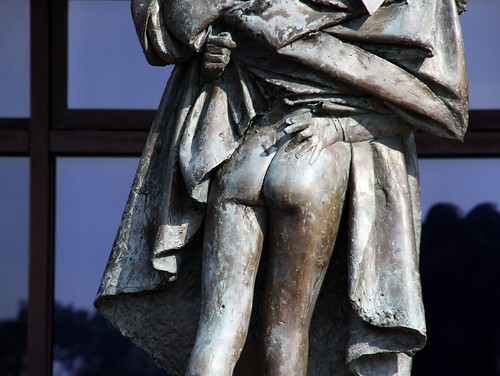
The Fukuoka Art Museum’s modern art collection includes pieces by Miro, Warhol, Rothko, Chagall, Basquiat and other famous names. What distinguishes it from other modern art collections I’ve seen, however, is the tone of the work. As I wandered the galleries, I realized that I was smiling and chuckling much more than I usually do in museums. Somewhere in the Fukuoka Art Museum is a curator with either a gleeful sense of humor or a sunny outlook on life. Even the sculptures in the plaza outside the museum – a giant yellow pumpkin and two figures with bare bottoms – seemed lighthearted.

Cheeky

I’d been reading Claire Messud’s “The Emperor’s Children” and was curious about the museum's Rothko. One of the characters in the book finds solace in the Rothko reproductions that decorate her small studio. Rothko is an artist who, for me at least, is synonymous with the dreary and the desolate. But the Fukuoka Art Museum’s piece, a two-tone square of color, magenta and white, both colors bleeding at the edges as if damaged by a heavy rain, struck me cheerful and vibrant. The magenta glowed with a vibrancy I hadn’t recognized before in Rothko. The closest analogy I can offer is the manufactured color of canned beets – a rich blend of red and purple. I spent ten good minutes in front of the canvas and came away with a better understanding of the artist and my own sensibilities.

The museum offered another surprise – prints from the "Diary" series by the Japanese printmaker Tetsuya Noda. The subjects were simple: portraits of friends and family and domestic scenes. Like the pieces in the modern art gallery, these were filled with humor and hummed with the stuff of life. A stencil of a young boy throwing a tantrum at a kitchen table was more funny than sad, the child’s face screwed up in a recognizable ball of fury. (Some good examples on this page.)

I skipped the gallery of ancient Japanese art altogether.

The next day I traveled 30 minutes south of the city center to a small town called Dazaifu, where a cluster of temples attracts a steady stream of tourists. It is also the site of the Kyushu National Museum, Japan’s fourth national museum. This modern museum, which opened in 2005, is located in the hills above the town and is reached via a steep escalator and a colorful tunnel. The building itself reminded me of a rolltop desk or one of those hardshell backpacks. It is a stunning building, but it still struck me boxy and akin to a fancy warehouse.

Kyushu National Museum

It’s a good thing, then, that the museum’s galleries are impeccable and that the permanent exhibits are educational without being overwhelming. With the help of a free audio tour, I wandered from prehistoric times (obsidian spearheads), through the advent of writing and currency to more modern examples of sculpture and religious worship. The museum has been attracting a million visitors a year – no small feat considering its remote location. I highly recommend a visit if you ever find yourself in Fukuoka (perhaps as a break from the 2016 Olympics).

I didn’t expect much from Fukuoka, least of all two enriching museums. It only reinforces how much I enjoy these outings, and how much I look forward to returning to the U.S., where I can gorge myself on art anytime I want.

Labels: , , , ,

Monday, September 17, 2007

Tokyo-ite

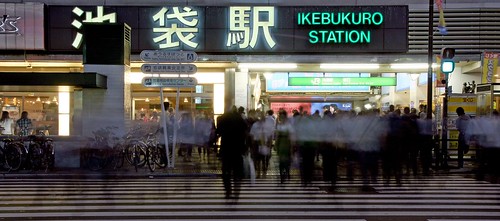
After seven months on the road I've arrived someplace familiar. However, it's been almost 15 years since I lived in Tokyo. While Tokyo is still Tokyo, it's not the same city I lived in for 18 months. Perhaps it's because I arrived on the Friday before a holiday weekend, three days of blazing sunshine in which the city's population of 12 million jammed the streets. Tokyo has always been crowded, but to my eyes it seems more crowded, more built up, more hectic, more everything, than it was in the early 1990s.

Ikebukuro Station

I'm withholding final judgment on the matter. I'll let you know my opinion in a month. Yes, a month. I've decided to put down temporary roots and re-explore this incredible city. I've rented an apartment for a month, a task made very easy by Sakura House, a real estate agency that specializes in rentals for foreigners. Yes, after seven months of transience, seven months of moving from hotel to hostel to guesthouse, I'll be sleeping in one place for four straight weeks. Even better, I'll have a kitchen when I can cook as much ramen as one man can eat in a month.

Finding Sakura House was a blessing. When I lived here in the early 1990s, there were no agencies catering to gaijin. There was also no Internet. Finding housing was a matter of either paying exorbitant fees through a rental agency, if you could find one that would housing to foreigners, or scanning the guesthouse ads in English-language publications. There were options, but it wasn't always easy. Now, I just popped in to the Sakura House office in Shinjuku and 30 minutes later was set up with a room in an apartment in a posh neighborhood in central Tokyo. I will be sharing the space with two other people. More details to come.

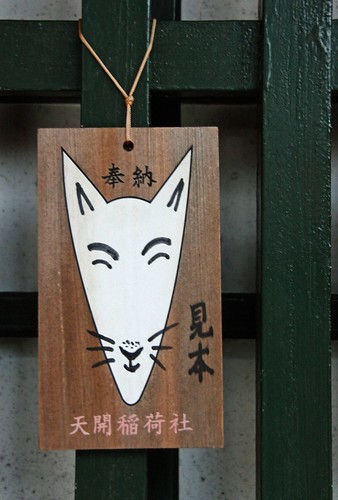
Cute or Scary?

How will I fill my time this month? For starters, I've signed up for three weeks of intensive language study. Three hours a day, five days a week. I hope to pick up enough Japanese that I will be able spend speak to the locals, both during my stay in Tokyo and during a few weeks of traveling that I've got planned for October and November. It's been rough lately being illiterate - I'd like to be able to ask simple questions and carry on basic conversations in the local tongue.

Also, Japanese could come in handy for that inevitable job search when I return to the States. Who knows? Gambatte!

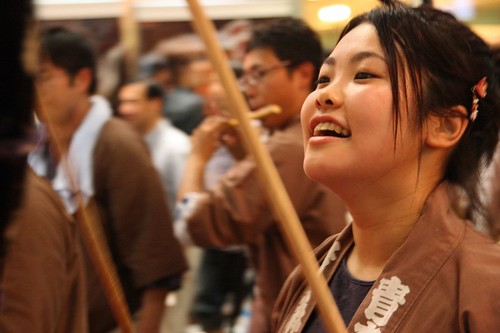
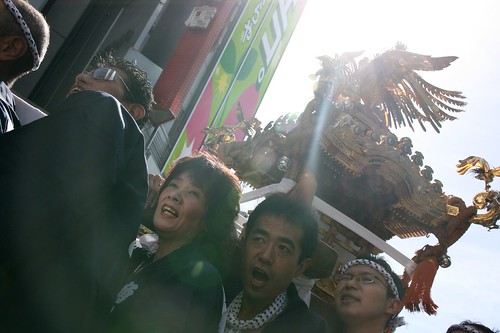
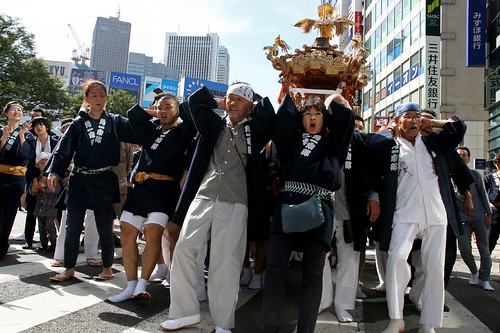
On a side note, there always seems to be a festival in the streets of Japan. This weekend, on Saturday night in Shibuya and on Sunday afternoon in Shinjuku, I came across groups carrying heavy arks through the streets while chanting and generally making a lot of noise. I don't know what the occasion was - another reason to learn Japanese. It looked like they were having a lot of fun.

Shibuya


Shinjuku


Shinjuku

Labels: , ,

Thursday, September 06, 2007

In the Dark

Before embarking on a life on the road, I was the editor of the movies section for NYTimes.com. It was a position that gave me an excuse to see a ton of movies, a pastime that I've enjoyed since childhood. I knew before packing my bags that travel and moviegoing do not coexist. I understood that I would be giving up afternoons in the dark for bumpy bus rides and foreign landscapes.

I have managed to take in a few films over the past seven months, a meager selection that's mostly included Hollywood exports like "Spider-Man 3" and "The Bourne Ultimatum." My only brush with world or independent cinema on the big(ish) screen was in Singapore, where I saw Ken Loach's "The Wind That Shakes the Barley," more than a year after it played at Cannes. Bootleg DVDs are widely available throughout Southeast Asia, and I've been able to catch a few titles that way, but watching a poorly-digitized copy on an 11-inch computer screen is not my idea of a good time.

Hong Kong has a long history of moviemaking. It was once the world's third-largest producer of feature filma, after the U.S. and India. But the Hong Kong film industry is suffering through a prolonged slump, resulting in reduced film production and the closing of many cinemas.

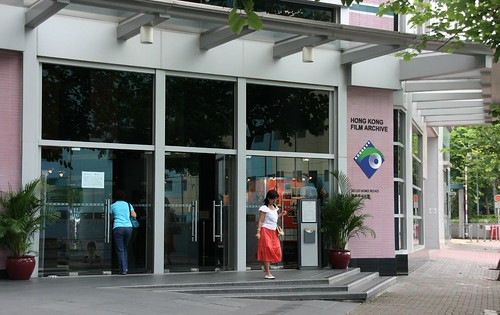
Like the rest of Asia, there are few options for moviegoing in Hong Kong. So I did the next best thing and headed to the Hong Kong Film Archive. The Hong Kong Film Archive is located in a neighborhood cluttered with high-rise, concrete apartment complexes. It is a small institution, considering the output of the Hong Kong film industry over the years and the size of the population. The archive is focused on film acquisition and preservation, but it also presents film programs (this month: Luis Buñuel and a two-day Australian film festival) and exhibitions in a small gallery space.
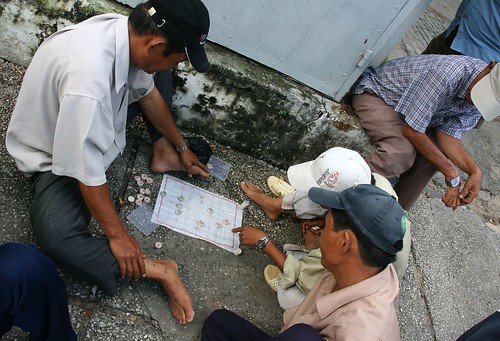
Hong Kong Film Archive

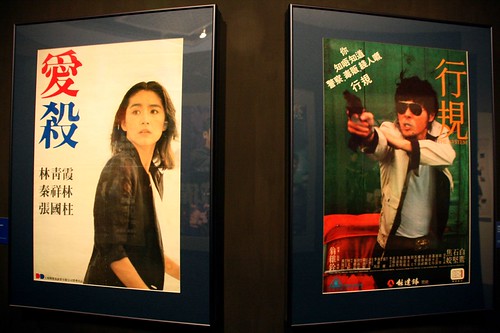
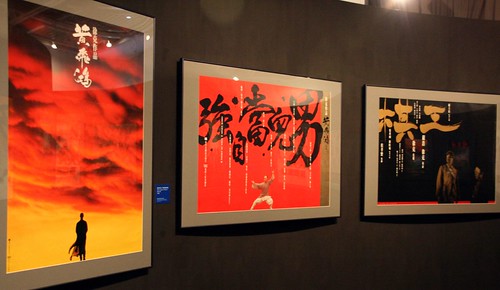
On the day I visited, there were no screenings (probably a good thing as I'm not in a Buñuel state of mind), but there was a exhibition of film posters from the 1979 to the present.

Posters are no substitute for the flicker of a moving picture, but I enjoyed the exhibition. Most Hong Kong films do not make it to the U.S. and even as a dedicated cinephile I only recognized a few titles: films by Wong Kar-Wai and John Woo and the excellent thriller "Infernal Affairs" (expertly remade as "The Departed" by the Oscar-winning Marty Scorsese).

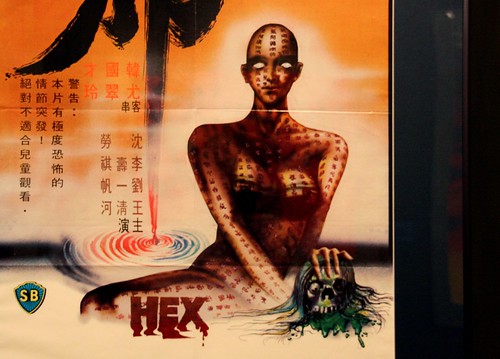
The posters were arranged thematically, giving a good sense of the breadth of Hong Kong cinema. There were buddy pictures, horror films, period pieces, prison dramas, thrillers and romantic comedies. Can a movie poster, which in the end is no more than a piece of marketing, be a work of art in and of itself? I think so, and this exhibit included a few keepers.

Danger!


Bold Type, Small People


Horror

Labels: , ,

Sunday, September 02, 2007

Walking the Walk

I was sick when I arrived in Hong Kong, spending the better part of four days in bed. I woke up Friday feeling much better and was able to have dinner that night with my former boss at The Times, Len Apcar. It was great to see Len, who is now Chief Editor of Asia for the International Herald Tribune, and to talk about familiar subjects from the past. When I was waiting for him to arrive at the Foreign Correspondent's Club in the Central District, I realized he was the first friend I'd seen in person since leaving New York City on February 1. I've made a lot of new friends on the road, of course, but the value of a familiar face can't be overestimated.

During dinner with Len and his son, Michael, I said that Hong Kong is a magnificent city. Michael didn't agree and asked me to explain myself. Try as I might, I couldn't come up with any concrete examples, no attractions that I could point to as worth the cost of a ticket. I stumbled through a list of generalities and left it at that.

Wall of Ads

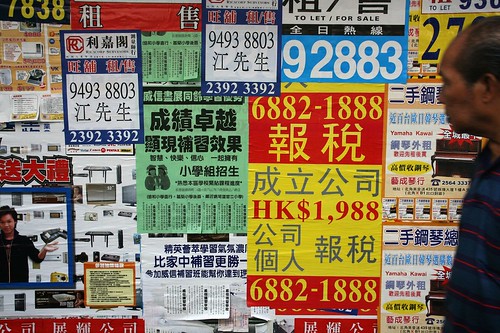
I've been thinking about that short conversation and trying to explain to myself what I like about Hong Kong. It could be that after five months in Southeast Asia I'm relieved to be back in a big, modern city, a city offering all the comforts of the first world. It could be that I've decided to take a breather, to put my feet up for a while, so to speak, and rest my road-weary bones. Maybe it's because Hong Kong feels more "Blade Runner" than anyplace I've been in my life.

Hong Kong is crowded and hectic, expensive and frustratingly uncomfortable at times. Yet it is energetic and picaresque, easily navigable and filled with abundant opportunities for exploration and discovery. It's got color and character, sights, smells and something for every taste. It's a photographer's dream and a foodie's delight. Since regaining my strength, I've only scratched the surface. I don't claim to understand this place, but as a casual observer it's a magnificent city to explore.

So explore I did. I've been using Lonely Planet guidebooks in every country I've been to this year. I would like to branch out to Rough Guides or the Footprint series, but Lonely Planet is the one series that is available everywhere I go. I won't go into the pros and cons of Lonely Planet (and the hordes that follow its advice). I will, however, concede that Lonely Planet does an excellent job with its self-guided walking tours of major cities. I've used them as a blueprint for exploration and they've consistently opened my eyes to places I would have otherwise missed.

The Hong Kong guide includes six walking tours, on Hong Kong island and Kowloon as well as the New Territories and beyond. I spent yesterday afternoon touring two colorful working-class neighborhoods in Kowloon, Mong Kok and Yau Ma Tei. It being Saturday afternoon, the streets were chockablock with people, crowds as dense as anything I've experienced in New York or Tokyo.

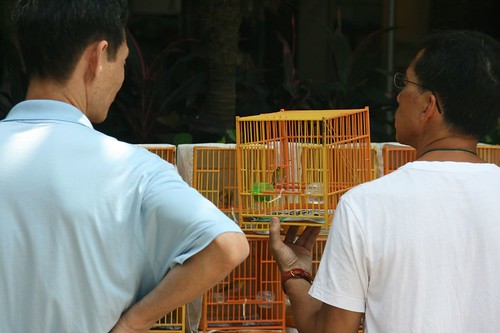
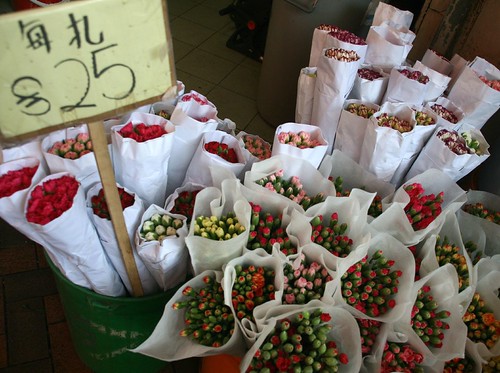
The tour started with two colorful destinations: the Yuen Po Street Bird Garden and the Flower Market. The Bird Garden is both a market and a meeting place, a space for local bird fanatics to coo over their avian companions and to buy a few live crickets or a new cage. Next to the bird garden is the Flower Market, a street lined with shops selling flowers and plants. The selection is limited and the impression is nothing like what you'd see a wholesale market. Still, it was colorful and worth fifteen minutes of meandering.

Yuen Po Street Bird Garden


$25 Bunches at the Flower Market

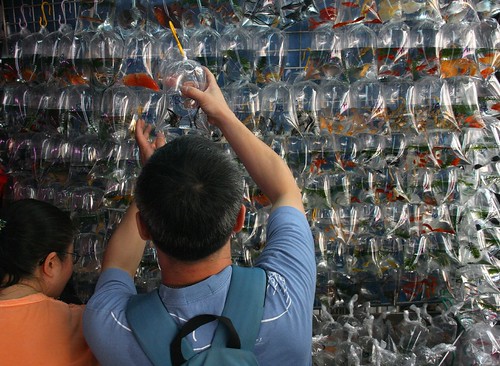
The walking tour then hit crowded Tung Choi Street, where the first few blocks are dedicated to fish, the kind you put in tanks rather than on a plate. I've noticed in Asia that consumer goods are often sold in one part of town, with shop after shop offering the same goods. There will be the shoe block, the fish block, the furniture block, the Buddha statue block, etc. I don't think this happens in the U.S., where we crave variety. I can't explain why things are done this way in Asia.

Tropical fish are sold in plastic bags in Hong Kong. Boards holding the bags are lined up outside of shops and buyers hold the fish up to the light to inspect color and health. Some shops also sell fish out of tanks, but most shoppers seemed interested in the fish in bags.

Fish Store

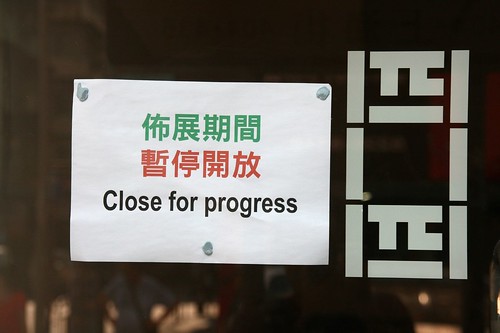
The walk continued into more crowded streets. I walked through the Ladies Market, a street blanketed on both sides with clothes stalls. I braved narrow aisles and intense crowding at Trendy Zone, an indoor mall targeted to young consumers. It was the consumer version of a Halloween House of Horrors. I was disappointed to find the cutting-edge gallery Shanghai Artspace closed for an installation, though I was amused by the sign on the door stating "Close for Progress." If it's in the name of progress, I guess it's okay.

Close for Progress

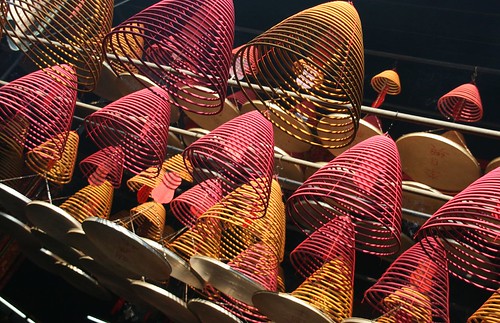
I ducked into Tin Hua Temple, a house of worship dedicated to the goddess of seafarers, where I admired the large spiral joss sticks suspended from the ceiling. For a mere HK$130 you can purchase one of the spirals, which will burn continuously for about ten days. My tolerance for temples is quite low these days, but Tin Hua was deserted and peaceful, the spirals offering ample angles for photography.

Joss Sticks at Tin Hua Temple

The tour ended at Broadway Cinematheque, which my guidebook described as an "alternative cinema." Perhaps I'd set my sights too high, hoping for an Asian version of Film Forum. But alternative cinema seems to consist of "The Simpsons Movie" and "Ratatouille." What's a film lover to do?

I did, however, enjoy a visit to the Kubrick Bookstore Cafe next door, a wonderful space serving food and coffee and selling a selection of books on film, art and design (all in Chinese). What's with the name though? Is it named for Stanley Kubrick? All I know is the menus scream in bold lettering "Let's Taste Kubrick!" Creepy.

Nothing in this tour brought me closer to understanding why I find Hong Kong to be a magnificent city. It was just another day walking the streets, peeking around corners and poking my nose into the local culture. It's what I do best.

Labels: , ,

Thursday, August 30, 2007

Tasting Menu

The moment I saw a McDonald's on Nathan Road in Hong Kong I knew that I'd arrived. It's not that I was craving a Big Mac (Happy B'day Mac!) - I haven't eaten at a McDonald's in years - it was that it had been two months since I'd seen the Golden Arches. The last time I'd set eyes on the familiar red and yellow logo was in Northern Thailand, in Chiang Mai, somewhere near the night market. All through Laos, Cambodia and Vietnam, I lived a McDonald's-free existence, a life without virtually every Western logo and brand name in the catalog of my brain.

Part of the allure of travel is getting away from the familiar. After a time, though, enough is enough. I was thrilled to be back in a city where McDonald's is part of the landscape. In Hong Kong, in fact, everything you can get in the West is part of the landscape. The stores are filled with consumer goods, the choices mind-boggling after a few months surrounding by the crumbling infrastructures and limited choices of Southeast Asia. I may have arrived in a city called Hong Kong, but in a way I'd come home. At the bottom of everything, I'm a first-world, developed nation kind of guy. I assume this could qualify as one of those eye-opening discoveries of "self" gleaned from the open road.

Now for the bad news. I'd arrived in Hong Kong feeling worse then I'd felt in years. Other than a minor cold in Bali, I'd managed to travel for close to seven months free of bugs, viruses or infection (hangovers don't count). I don't know what I picked up, or where, but the last few weeks have been a struggle. I thought it was a sinus infection, and took a course of antibiotics, but that didn't help. I now suspect it was a combination of sinus infection, cold, exhaustion and depression.

I spent the first few days in Hong Kong impersonating a tourist, visiting sights and taking a few photos, but my heart wasn't in it. I would find myself in a drippy-nosed daze, wandering unfamiliar streets and unaware of the people around me. I've spent the last few days doing absolutely nothing other than reading, watching DVDs, sleeping, drinking lots of juice and eating noodle soups (fat noodles, skinny noodles, Chinese noodles, Japanese noodles - it's a good thing I like noodles).

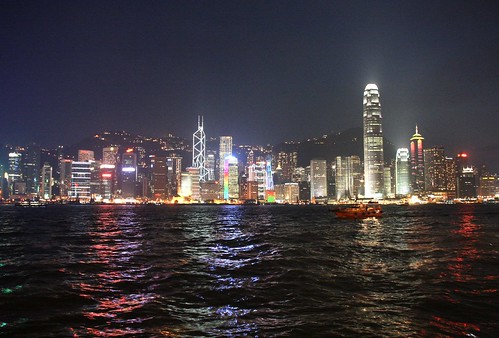
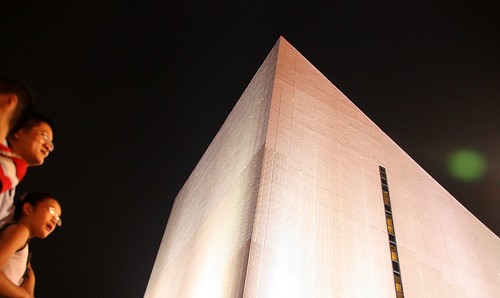
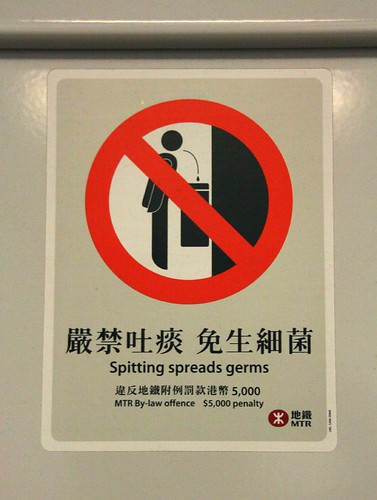
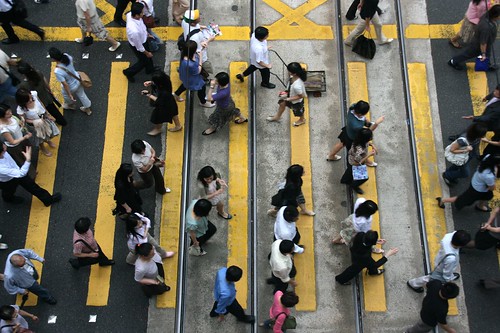
I'm feeling better today, enough to post some images to Flickr and present you with a short photo essay on Hong Kong. It's a magnificent city, a photographer's dream. I hope to get out again once I'm back to health and really document my visit. For now, enjoy these snaps.


Hong Kong Skyline


Hong Kong Cultural Center


Spitting Spreads Germs


Crossing


IFC Mall


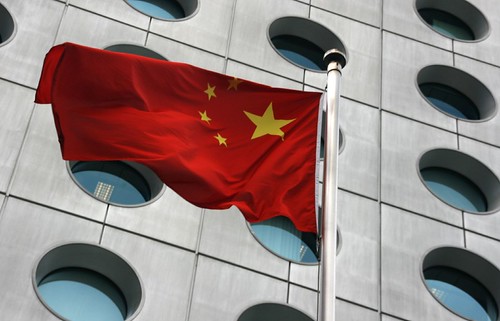
Chinese Flag at Jardine House


Something Abstract to Match My Mind

Labels: , ,

Thursday, August 09, 2007

24

England, the United States, Australia, Indonesia, Singapore, Malaysia, Thailand, Laos, Cambodia and now Vietnam. Ten countries in six months, eleven if you count Borneo as separate from Malaysia (there is a Sabah stamp in my passport). That’s my life in 2007. And every time I’ve entered a new country, the first 24 hours have presented me with challenges delightful and frustrating, exciting and depressing, and always enlightening.

It was with this state of mind that I disembarked from a long-distance bus in Ho Chi Minh City, Vietnam. The journey from Phnom Penh in Cambodia started at the crack of dawn and took seven long hours, including an hour to get through immigration. I’d booked a hotel in advance and was looking forward to flopping on a lumpy bed for a few hours of sleep.

More than once I’ve heard travelers refer to Vietnam (rhymes with “ham”) as Viet-scam. I filed this information in the back of my brain, between the names of the islands in the Andaman Sea and remote tracks in the Australian Outback. When I reached HCMC, the information bubbled to the surface, leading me to raise the scam-o-meter to orange.

By coincidence, the bus deposited me on the same block as my hotel. However, the motorbike driver who intercepted my passage across the busy street told me the hotel was too far too walk. Orange Alert! I shrugged him off and 20 seconds later was standing in the hotel’s lobby.

The young woman behind the reception desk, the Redsun Hotel in the backpacker mecca of Pham Ngu Lao, may or may not have received my Internet booking. I established that my name was indeed on her list of reservations, then she told me that she didn’t have a room, that a guest “has sick” and would be staying in the room I reserved. She told me she’d take me to another hotel and then pick me up in the morning and bring me back. The situation reeked of scam, but she was apologizing profusely and looked ashen and ill so I gave in.

She took me to another hotel, on a loud street about five minutes away. I was put in a room on the top floor and was even able to receive a weak Wi-Fi signal. I’d chosen the Redsun because it offered Wi-Fi in the rooms and I wanted to spend some time updating my blog. The night passed without incident, with me busting a gut while watching a bootleg DVD of "Knocked Up," and in the morning I was taken back to the Redsun.

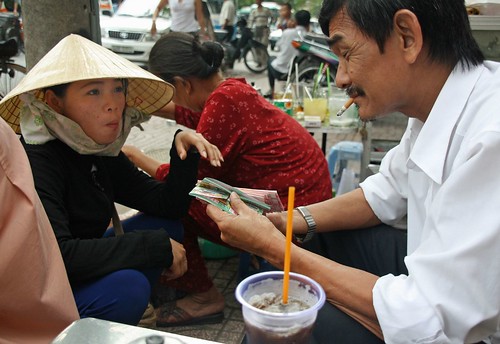
Iced Coffee and Lottery Tickets in Ho Chi Minh City

I'd love to say that everything is hunky-dory at the Redsun. I can’t. Only one of three lights in my room works. The woman who owns the place insisted on sending her 12-year-old son to dismantle the main fixture while I was in the room, despite my pleas that I wasn’t feeling well and would prefer that they fix the light the next day. Also, there is a Wi-Fi signal but it’s extremely weak and craps out every ten minutes. Remember what it was like to use a 56K modem? It’s worse. To top it off, the young woman who checked me in has checked me out and turned creepy – I think she wants to marry her for a green card.
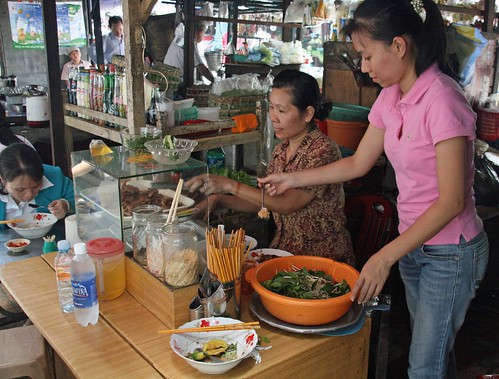
I found another hotel today, just across the lane from the Redsun, and will be checking in tomorrow. The Redsun isn’t the worst place I’ve stayed in – that honor goes to a hostel on the beach in Perth, Australia – but it’s in the running for the top three, certainly the most frustrating in Asia. It makes the hotels in Cambodia look like well-oiled machines.

I am happy to report, however, the rest of my first 24 hours in Vietnam have been fantastic.

I bitched and moaned in Thailand about being lonely on the road, then I went to Laos and Cambodia and made some. The last four weeks brought new friendships and a boatload of hangovers. I wouldn’t trade the experiences for anything. Still, when I set out to explore HCMC on my own I was reminded of how much I enjoy the freedom inherent in traveling alone.

I like to sketch an outline of exploration when I arrive in a new city. The route will always take in a public market, a museum and a city square. I always make time to sit at a café and watch people. I will browse for hours in the bookstores. I seek out side streets and neighborhoods where there are no other tourists. In short, I clear my head and open my eyes. It’s the best way I know to orientate myself to new surroundings.
So I set out early for Ben Thanh Market, a vast complex packed to the rafters with merchandise, food and shoppers. Markets tend to look that same the more you visit, like department stores and parks, but I love them and find great pleasure in wandering the aisles. Perhaps it’s because I try to bring a photographer’s eye to each place, looking for colorful, unusual and exotic details. After 20 minutes of shutter-induced euphoria my battery ran out. My spare was dead too! Crap.

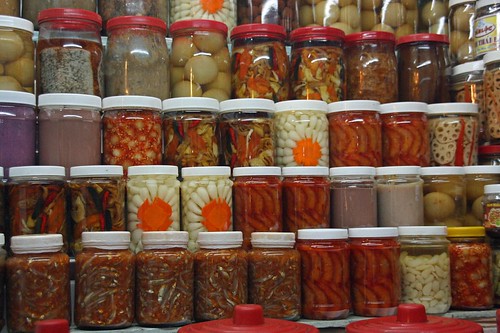
Pickled at Ben Thanh Market

My morning at the market cut short I returned to the hotel to plug in the charger for an hour. It was at this point that the woman at the hotel turned creepy. Interesting and enlightening, yes. But also quite uncomfortable. If she were attractive and sane I might give it a chance.

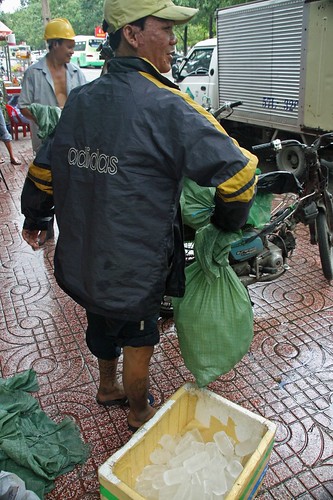
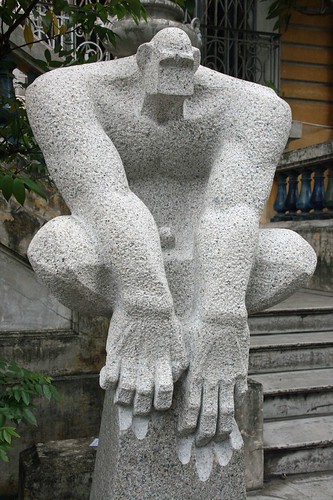
Anyway, I returned to the streets and just started walking. I passed an ice factory, stopping to stare at one man sawing blocks and another loading bags of fist-sized cubes into a truck. They seemed confused by my curiosity and pushed me into the frigid cooler to take some photos. At an intersection near the Fine Arts Museum I was nearly run over by a motorbike while crossing the street. (There are more motorbikes in Vietnam than sheep in New Zealand, I think.) The art, all of it approved by the government, wasn’t worth the fright, but I enjoyed the faded grandeur of the yellow-and-white building. On a street lined with antiques and curios, I paused to watch two men play Xiangqi, or Chinese Chess. The game is baffling and I have no desire to investigate further (I stink at regular chess, so why would I?).

Ice Man


Sculpture at Fine Arts Museum


Sidewalk Xiangqi

The next stop was the outdoor street market at Dong Ton That Dam. This is the real deal, a street-level affair catering to the locals, where butchers fillet on wooden boards, cigarettes are piled to the sky and packages of dried noodles are laid out in patterns rivaling the greatest mosaics in Italy.

It was at this point that my life as a traveling gourmand took a turn. No, I didn’t eat another spider> Or grubs or pig’s trotters. In fact, what I ate was rather pedestrian: vermicelli noodles with barbecued beef (bun bo?). I’ve been in Asia four months and have not suffered one bout of gastroenteritis. I’m as regular as the sun and the moon (too much information, sorry), a condition that I attribute to my healthy intake of spicy chilies. It's a state of affairs that has given me the courage to take some risks.

I wouldn’t eat street food just after getting of the plane. After four months, however, I believe all the the bugs in my stomach are locals. Lest you think I’m crazy, I still wouldn’t drink out of the tap or eat sketchy meat off of a street cart. Some people refuse ice cubes; I’d die without an iced coffee in the afternoon. In the end, I trust my instincts and I'm always thinking about what goes in, lest I'm unhappy about how it comes out.

Okay... moving on. I ate street food and hoped for the best. I've eaten a lot of food of the streets, but it's always been soup or rice, dishes cooked through and through. This was different, with fresh vegetables thrown on top of cooked ingredients. Where were those vegetables washed? That's what worried me. Twenty-four hours later, I’m feel better than I did before the meal. You only live once.

Lunch Counter

The rest of the afternoon, I played tourist. Every guidebook lists the buildings a tourist should visit. Sometimes it seems from reading recommended itineraries that cities are nothing more collections of concrete and stone, sometimes wood. I passed by the Rex Hotel, the Reunification Palace, the Hotel de Ville, the Municipal Theater, and every time there were tourists taking pictures of themselves outside the front door.

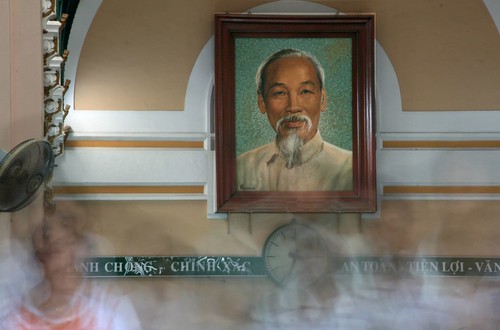
I was surprised by one building. The highlight of my architectural tour was the main post office, a grand old building with a large portrait of Ho Chi Minh at the end of a long arched interior. The building was constructed in the late 1880’s in the French style. Someone’s been taking care of it; the interior is spit-polished, bright and extremely beautiful. The last time I saw a functioning building that took my breath away was back in the middle of May in Kuala Lumpur.

Ho Chi Minh (and Ghosts)

The day ended with a steaming bowl of Pho, a noodle and beef soup that could be considered the national dish, but only if there were not so many other delicious dishes clamoring for attention. I’ve just touched the tip of the Vietnamese culinary experience. More to come, I promise.

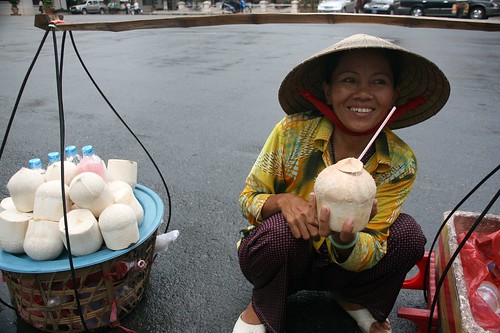
I didn’t do anything out of the ordinary on my first 24 hours in Vietnam. For me the joy of travel is accepting the unexpected, and if I’m not expecting anything then everything holds the potential for excitement. Drinking fresh coconut juice while squatting on a Ho Chi Minh City sidewalk gives me as much pleasure as seeing great art or watching a sunset. It‘s all new to me these days, and that’s what I love about life on the road.

Coconut?

Labels: , ,

Wednesday, July 18, 2007

Backpacker's Delight

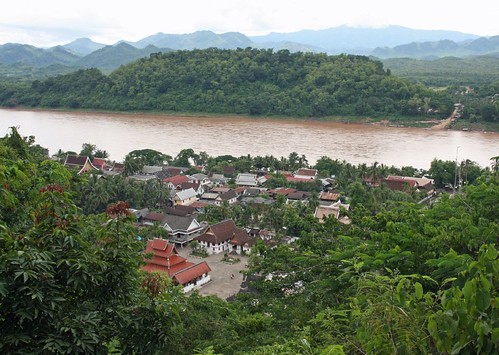
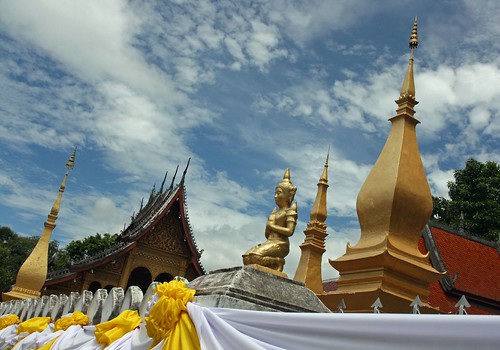
Luang Prabang, Laos, is a backpacker’s dream town. With a population of about 25,000, Luang Prabang is big enough to offer religion, architecture, culture, cuisine and natural beauty, yet small enough to allow for unscripted exploration around gilded Buddhist temples, through narrow, leafy lanes, and on the banks of the muddy Mekong River. It is one of the premiere tourist destinations in Laos, but somehow the outside world hasn’t had time to spoil the local culture. Unlike the popular islands I visited in Southern Thailand, Luang Prabang feels real. It’s the kind of place that takes hold of your imagination, where you can walk down the street and believe you are somewhere special.

Luang Prabang is situated at the confluence of the Nam Khan and the Mekong River in Northern Laos, about 400 kilometers north of Vientiane. The town is 700 meters above sea level and surrounded by lush mountains. Twentieth-century war and revolution decimated the ancient town, but since the collapse of communism tourism and regional trade have combined to inject new life into the region.

Luang Prabang and the Mekong


Wat Saen

In the 18 years since Laos opened itself to tourism, much has changed, but to my eyes it feels like there is still more Lao culture than anything else. There are no Western franchises in Luang Prabang, no Starbucks, McDonald’s or KFC. There are no shopping centers or mini-malls. The selection of commodities is limited to food and the bare necessities. It is a quiet place; perhaps one of the last of it’s kind in Asia.

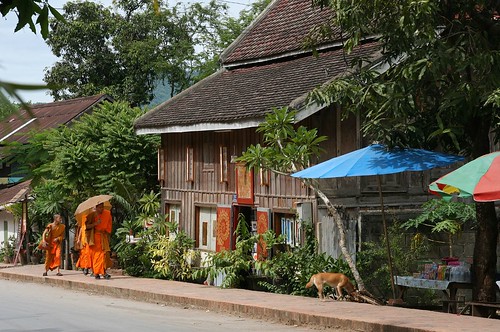
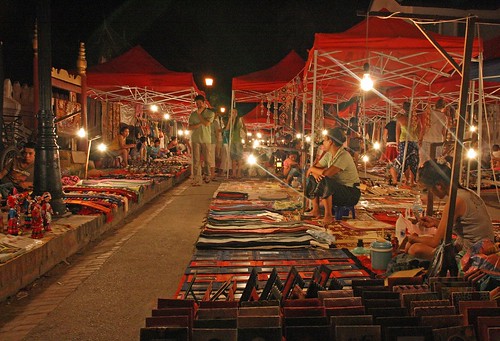
I spent three full days in Luang Prabang with my feet on the ground and my eyes wide open. I saw groups of European tourists buying crafts from women in traditional tribal clothing while orange-clad monks strolled by on their way to one of the town’s historic temples. These scenes occurred amid a stunning array of Buddhist temples, faded French colonial facades and ramshackle wooden houses. In the historic district at the north end of town, I strolled though narrow leafy lanes, the foliage shielding ornate guesthouses and modern bistros. At night, some streets were transformed into bustling marketplaces offering clothing, handicrafts, and jewelry. Other streets were devoted to food, with tables set up with heaping piles of spring rolls, bowls of spicy papaya salad, and skewered and grilled meats.

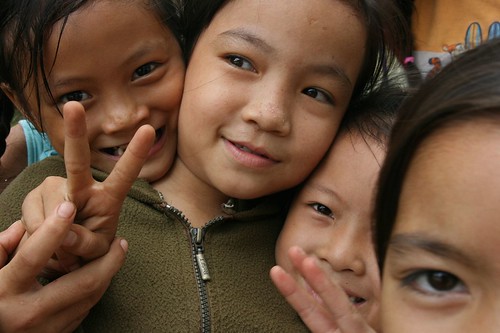
Kids


Monks


Night Market

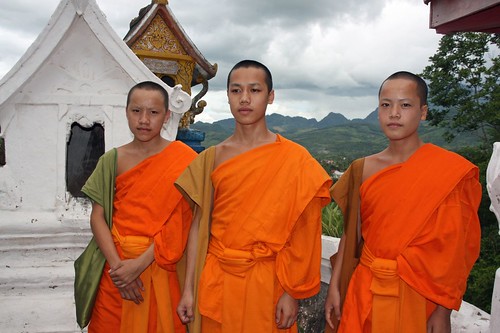
Luang Prabang is home to many temples, and therefore many monks. I had seen monks in Thailand and had tried to smile or make eye contact, but was never able to elicit a response. However, there are novice monks in Luang Prabang who spend their free time relaxing at some of the popular tourist spots. These novices are students who spend a year or two as a monk and then move on. From what I understand it’s a way to get an education and open up future possibilities. Part of that education is learning English, and what better way to learn a language than talk to tourists?

I met the first group of novice monks near the top of Phu Si, a large hill in the center of Luang Prabang. Three boys, Ken, Si and Fan, ages 15 and 16, had the afternoon off and had come to a small temple of the north slope of the hill to hang out. Conversation was limited by their skills to simple topics – where we are from, what do we do, etc. I learned they were from small villages and were in Luang Prabang to learn. They didn’t know what they wanted to do in the future, but seemed to be leaning toward teaching. I don’t think there is a lot of opportunity for these kids and hope they will find something engaging to do with their lives.

Novice Monks at Phu Si

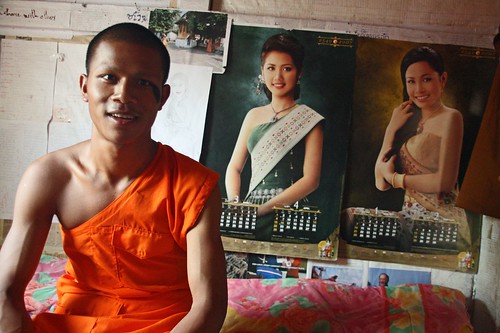
The next day I was walking by Wat Sirimungkhun. The hour was nearing 11 a.m. and the sun was strong. I’d already sweat through my shirt and was hoping to find a shady spot to get some rest. I heard a monk call out “Hello” in very clear English and decided to engage him in conversation. Somlith was a 17-year-old novice monk from a nearby village. He was passionate about learning English and was excited when I sat down to chat. We covered the usual subjects and then I ask him for a tour of the temple. It was Sunday so the schoolroom was closed, but he did show me the novice monks’ living quarters.

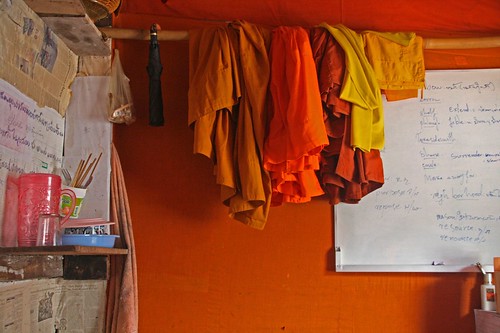
The novices live in small, spartan rooms – a bed, a window, a small desk and a rod to hang their robes. There was stack of books on Somlith’s desk, a small language dictionary at the top of the pile. His walls were covered in pencil drawings of Buddhas, a white board, lists of English words with the Lao translations and, most surprisingly, two large calendar posters featuring beauty queens. Somlith said a European visitor had given him the posters. He seemed embarrassed by their presence, but not because he was a monk, but because he was shy 17-year-old boy.

I took pictures of the boys at Phu Si and of Somlith in his room. I was surprised, again, when I was asked to send them the photos in email. Laos may be a poor country, with most of the population surviving on subsistence farming, but it’s also a company that is looking ahead. That these monks would even have email was beyond my expectations. That they want to maintain a correspondence with me is incredible. I’m sometimes asked about the friends I make on the road. I never expected those friends to include a couple of teenage monks in Northern Laos.

Novice Somlith


Somlith's Room

Luang Prabang wasn’t all about the monks, however. I’d made some good friends on the ride down the Mekong and spent a lot of time hanging out with them. The best friendship turned out to be with Guillaume and Emmanuelle, the young French couple from Amiens. In Pak Beng, Guillaume and I spoke briefly about pastis, a French aperitif that I adore. We agreed to get together in Luang Prabang at a pub owned by a French ex-pat and throw back a few glasses of the cloudy, anise-flavored elixir.

We met at the Maylek Pub at the appointed time and spent the evening at a small table on the sidewalk. The pub is outside of the main tourist area and it felt to me like one of those true travelers’ meetings, where people from different countries just enjoy the short time they have together. Perhaps I was romanticizing the situation, adding significance to the fact that I was in a former French colony enjoying French liquor with a French couple.

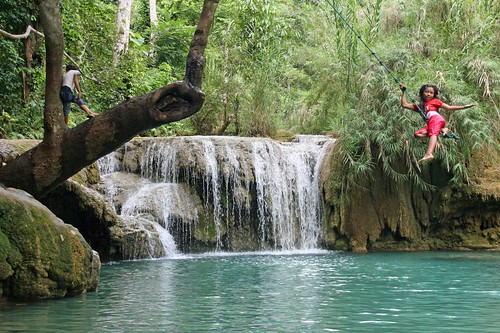
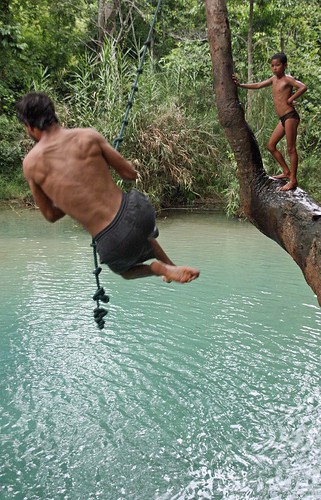
Guillaume and Emmanuelle had been to Tat Kkuang Si, a series of waterfalls and swimming holes 32 kilometers south of the city, that afternoon and wanted to return the next day. We met outside the post office (La Poste) and hired a tuk-tuk to take us to the falls. Once again, Luang Prabang surprised me. I imagined the falls would be overrun with tourists, but it was Saturday and we spent our time hanging out by a turquoise swimming hole (complete with rope swing) where Lao families were gathering for weekend picnics. It was another moment of Laos just being itself.

Girl on Rope Swing


Guillaume Takes Off

Flickr Photoset: Luang Prabang to Vientiane

Labels: ,

Tuesday, June 26, 2007

Breathing in Bangkok

In 1994, in transit between Tokyo and Delhi, I spent one night in Bangkok (insert jokes here). I arrived late in the evening and sacked out on Khao San Road, a haven for backpackers from all over the world. I don't recall much from that visit other than a cheap room with thin walls (the couple in the next room put the walls to the test), polluted air and dense traffic. I left early the next day for India and didn't think about Bangkok for many years.

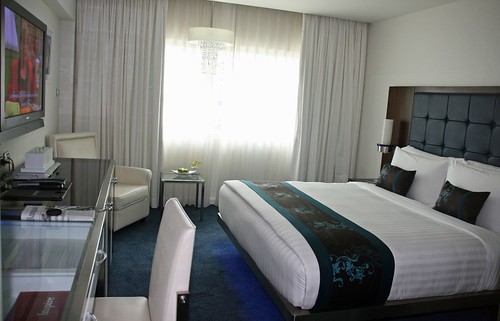
I'm back in the city now, and it's still sprawling and polluted. I haven't returned to Khao San Road though. I've opted instead to go upmarket for a week, booking first into Dream Bangkok, a boutique hotel with all the trimmings, and then Cozy on 10, an affordable "city residence," both located off Thanon Suhkumvit, a section of the city popular with ex-pats and filled with mid-range accommodation. It's been great to settle into a bit of luxury and leave the backpacker trail behind. This is Bangkok after all, a city with a cosmopolitan heart beating behind a chaotic facade. Who couldn't use a few nights sleeping on 300-thread-count Egyptian cotton and watching movies on a 43-inch plasma-screen television?

Dream Bangkok Hotel

Official figures list the population of Bangkok at around 8 million, but the true number is probably double that. This is one crowded city, a patchwork of dense neighborhoods where poverty and wealth coexist, where modern skyscrapers cast shadows over hidden hovels. Beggars line the streets, empty cups outstretched to men and women wearing high-end fashions from European and American designers. It's a city of contrasts and contradictions, a city I haven't begun to understand and probably never will. I just walk the streets and breathe it all in, choking pollution and all.

I believe one way to get to know a place is to visit its markets. I ended up spending my first two days in Bangkok in two different shopping environments. Taken together I think they represent two sides of Bangkok (and Thailand). I first visited Chatuchak Weekend Market, the big Buddha of Bangkok's outdoor markets. I spent the next day at the super-duper upscale Siam Paragon, an ultra-modern shopping complex hawking luxury goods (jewels, furniture, clothing, even Ferraris and Lamborghinis) and visions of the future.

Outdoor market is usually a euphemism for flea market. I was pleasantly surprised to find that Chatuchak, while offering some used good, is a true market. I wandered the aisles, discovering new products around every corner: books, flowers, religious statues, furniture, pet supplies, art, fruits and vegetables, CDs, handicrafts, knickknacks and clothes, so many clothes. Young designers sold their original designs out of tiny stalls, which to me turned an ordinary marketplace into a center of creativity.

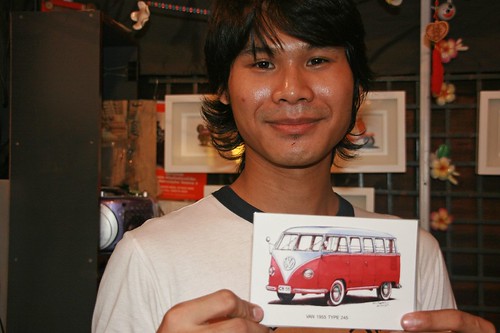
I was struck by the range of t-shirts stenciled with clever and attractive designs. I was tempted to buy one with a cat perched atop a stack of amplifiers, but they didn't have a color that I liked. I did, however, buy a set of postcards from a young artist. His expertly rendered drawings of classic Volkswagens (buses and bugs), Mini Coopers and Vespa scooters were too good to pass up. If you are reading this, you may receive one in the mail soon.

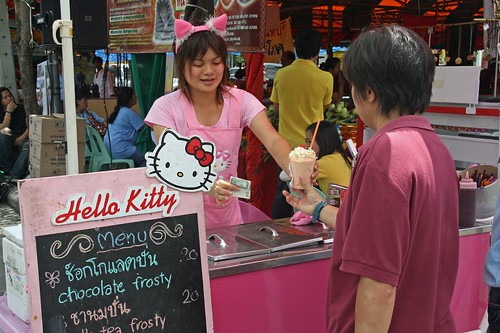
Hello Kitty Chocolate Frosty


Chatuchak Clothing Stall


Artist With Postcard of 1955 Volkswagen


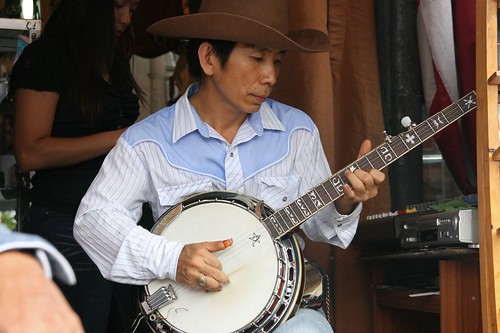
Thai Cowboy


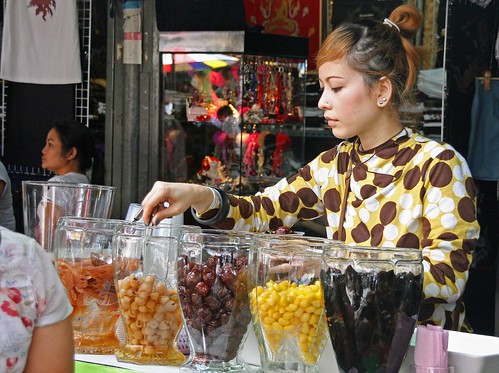
Drink Stall (With Matching Blouse)

No market is complete without food. Chatuchak's food stalls are the perfect place to rejuvenate after some serious shopping. Vendors sell soups, noodles and salads from makeshift kitchens wedged into corners of the market. There are also juices, jelly drinks and coffees for sale. I sat down on a wooden bench for a frothy iced coffee and then walked and sipped a freshly-squeezed glass of tart orange and lime juice. Lunch was a a steaming bowl of thin rice noodles with nuggets of chicken and fresh veggies.

Chatuchak is a market for the people. It's down to earth, accessible and welcoming. It's a place where I saw families, couples and teenagers hanging out, shopping and having fun. I stopped and listened to amateur musicians busking for spare change and joined a dense crowd at a makeshift shop selling gold. Chatuchak has something for everyone, even a non-shopper like me.

I was surfing through cable television that night at the hotel while munching on a room service hamburger (you only live once) and came across a segment on a local program about a True Urban Park, a technology-oriented cafe at a mall called Siam Paragon. I hadn't heard about Siam Paragon, so I jumped online and did a little research. According to Wikipedia (a site I trust more every day for facts and figures about Asia), Siam Paragon opened in December 2005 and is one of the largest malls in Asia. The complex includes the obligatory shops and restuarants, but also boasts a concert hall, exhibition spaces, a gourmet market, an aquarium, a bowling alley and a multiplex with the largest multiplex screen in Asia (in the 1,200-seat Siam Pavali, which translates as "The Heaven of God in Siam").

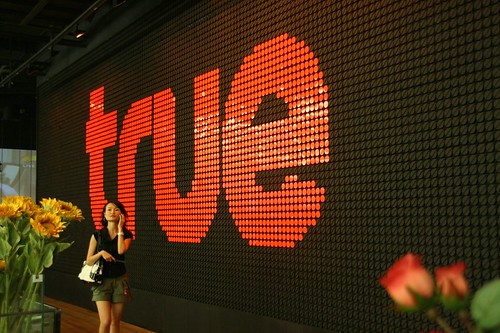
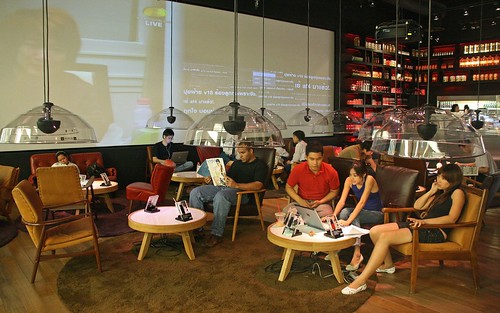
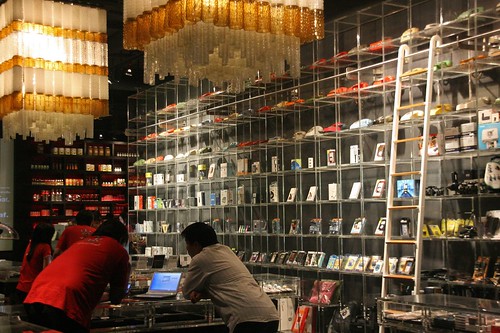
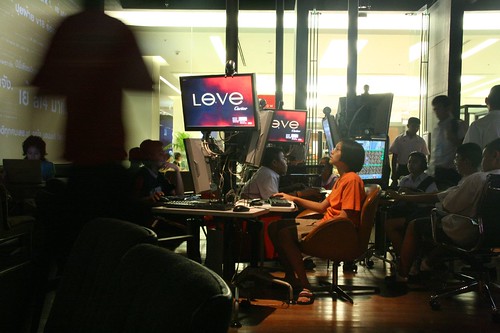
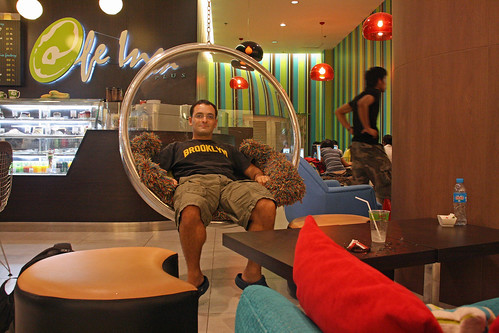
True Urban Park reminded me of an Apple Store crossed with a Starbucks. I learned later that True is a local Internet service provider and the shop a marketing tool. Still, I felt right at home amid all that technology. There is a cafe at one end where clear-plastic lampshades hang from the ceiling and a video screen dominates one wall. The center of the store is dedicated to the latest in technology: computers, mp3 players and cameras are displayed like luxury handbags on a shelf unit. There is a nook filled with books on design and an eclectic collection of CDs. The store is anchored by a lounge with Internet-enabled computers and wide-screen monitors. Prepubescent boys perched played games featuring guns and gore; the girls preferred games in which they taught characters dance routines. And there was wi-fi (why did I leave my laptop at the hotel)?

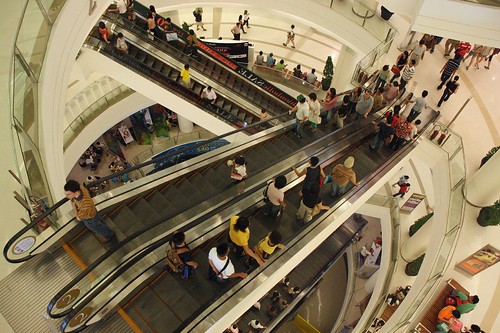
Siam Paragon Escalators


True Urban Park


Cafe


Tech Wall


Internet Access

I spent the rest of my time at Siam Paragon wandering through the mall, gawking at price tags and musing on globalization and consumer culture. I passed up the aquarium and bowling alley in favor of some quality time at Kinokuniya, one of my favorite bookstores in the world, and was tempted to pick up a new collection of short stories by one of my favorite writers, Haruki Murakami.

In my travels through Southeast Asia I've seen plenty of McDonald's, KFC and Starbucks, which didn't surprise me. I didn't expect, however, to find Bentley, Bose, Mont Blanc and Versace in Bangkok. Call me silly. Call me naive. Call it a learning experience.

What about the food? I've gone four paragraphs without mentioning anything edible. Well, it was a mall. The food court was beautiful, there were luxury restaurants to match the luxury boutiques. I ate a greasy plain plate of Japanese noodles with tempura prawns. I did, however, discover a local ice cream parlor called iBerry, where I was tempted by a scoop of Banana & Cheese ice cream in a waffle cone. I curbed the impulse and moved on.

There is a scoop of Banana & Cheese ice cream in my future. But that's another story. Stay tuned.

Hanging Out at Siam Paragon

Labels: , ,